.D5CzYVR1.png)


Single-Tube Shortwave Infrared Night Vision Monocular
PRODUCT DESCRIPTION
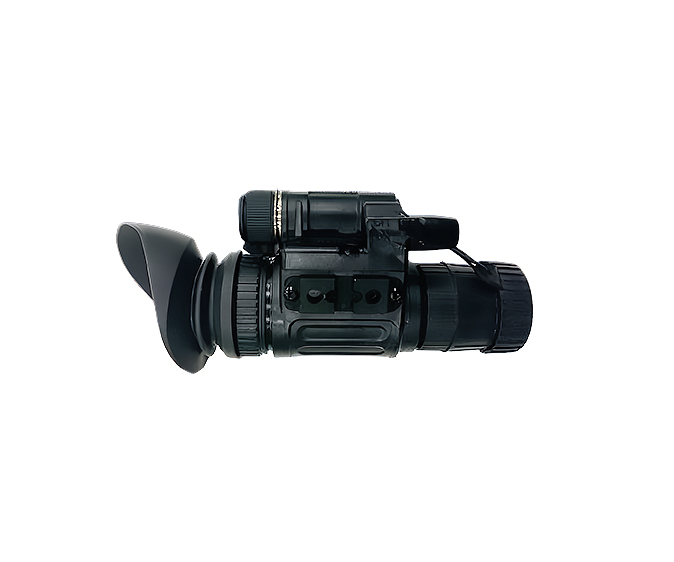
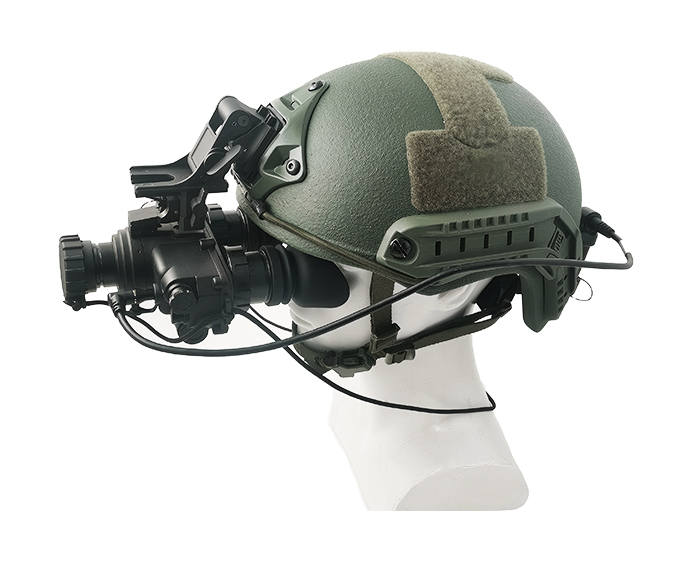
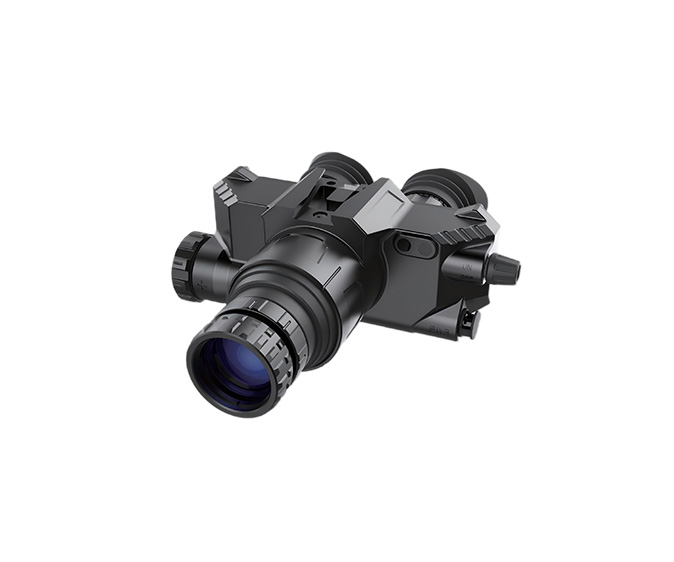
The Single-Tube Shortwave Infrared Night Vision Monocular is a compact night observation device designed for low-light and nighttime use. It provides 1× natural viewing with a wide ≥50° field of view and supports personnel detection and recognition under moonless and starlight conditions. Its lightweight design makes it suitable for portable and head-mounted observation.
MAIN FEATURES
The monocular provides wide-field nighttime observation with 1× natural magnification for comfortable environmental awareness. Under moonless and starlight conditions, it supports personnel detection at distances of ≥120 m and recognition at ≥100 m. The ≥50° diagonal field of view helps expand the observable area, while the lightweight ≤450 g construction improves portability for nighttime walking, close observation, equipment operation and reading.
PRODUCT PARAMETERS
Operating distance:
Under the condition of no moon and starlight. the discovery distance to people ≥120 metres,the recognition distance≥100 metres;
Field of view(diagonal)
≥50 degrees
Visual magnification
1×(±5%)
Weight
<450g(including objective lens cover. eyecup, laser irradiation, battery)
DETAILS INTRODUCTION
Operating distance:
Under the condition of no moon and starlight.
the discovery distance to people ≥120 metres,the recognition distance≥100 metres;
Field of view (diagonal):50 degrees
Visual magnifieation:1x(±5%)
Weight:<450g(including objective lens cover.
eyecup, laser irradiation, battery)
In the military field, image intensifiers and CCDs (Charge-Coupled Devices) each have their advantages. However, image intensifiers are more suitable for core military tasks such as nighttime reconnaissance and aiming, while CCDs are better suited for scenarios requiring high-precision image acquisition and processing.
1. Image Intensifier: Core Equipment for Nighttime Combat
The core function of an image intensifier is to amplify weak light signals to observable brightness, making it particularly suitable for low-light environments such as nighttime reconnaissance, aiming, and driving. It achieves signal amplification through a photocathode, an electro-optical system, and a fluorescent screen, relying on electron multiplication technology to improve brightness, and features high gain and low noise. In the military, low-light night vision devices are widely used in nighttime reconnaissance, aiming, and driving missions, and are an indispensable part of modern warfare.
2. CCD (Charge-Coupled Device): A Powerful Tool for High-Precision Image Acquisition
A CCD tube is a solid-state image sensor responsible for converting light signals into electrical signals and outputting image data. It boasts advantages such as small size, light weight, low power consumption, wide dynamic range, and high resolution. In the military field, CCDs are commonly used in low-light television systems, coupled with image intensifiers to achieve high-sensitivity imaging under low-light conditions.
If you need to use it directly for core military missions such as night reconnaissance and targeting, an image intensifier is a more suitable choice; if the mission involves high-precision image acquisition and processing, a CCD has a greater advantage. Using both together, through coupling technology, will improve overall combat performance.
The coupling technology between image intensifiers and CCDs is a core breakthrough in military optoelectronic systems. By combining the signal enhancement capabilities of image intensifiers with the high-precision imaging of CCDs, tactical reconnaissance and target identification in extremely low-light environments can be achieved. This technology overcomes the limitations of traditional night vision equipment in complex battlefield environments.
Image Intensifier: Its high gain and low noise characteristics make it the first choice for night operations.
CCD: Its high resolution and dynamic range are suitable for scenarios requiring high-precision image acquisition, such as aerospace and military equipment inspection.
Conclusion
Prioritize Image Intensifier: For core military missions such as nighttime reconnaissance and targeting, if direct use is required. If the mission involves high-precision image acquisition and processing, prioritize CCD.
Combined Use: Enhance overall performance through coupling techniques (such as fiber optic cones or relay lenses).
Combining Image Intensifier and CCD in military operations provides high-sensitivity imaging, high dynamic range, low noise, and strong environmental adaptability in extremely low-light environments, making it particularly suitable for low-light environments such as nighttime reconnaissance, targeting, and driving.
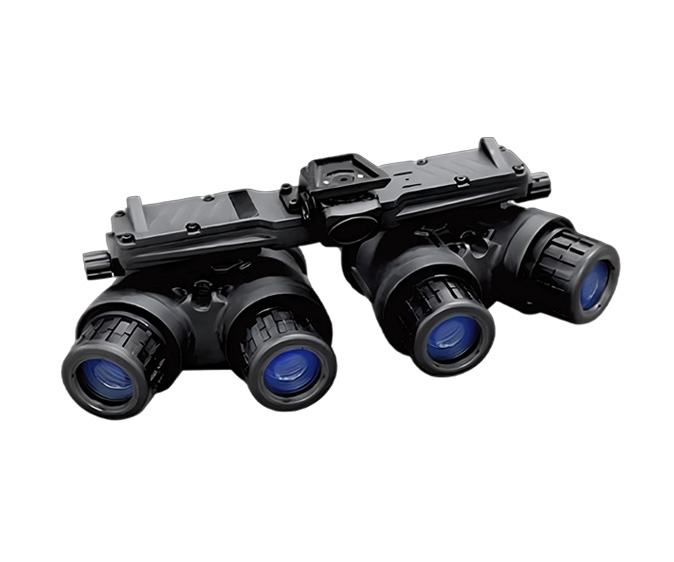
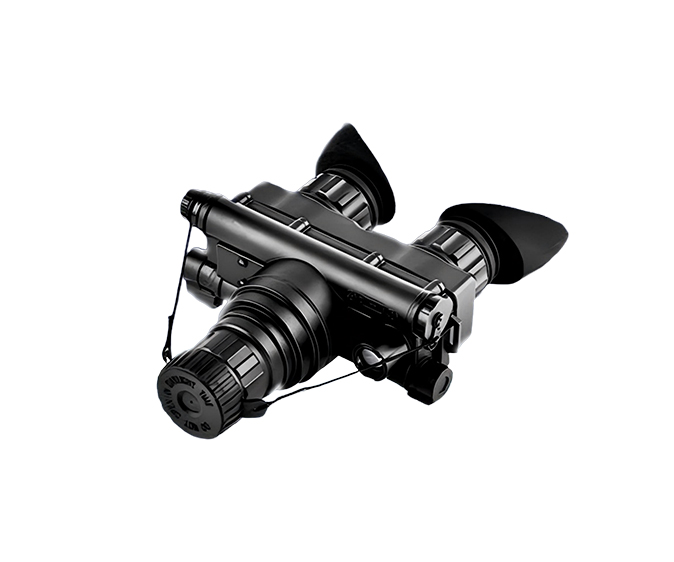
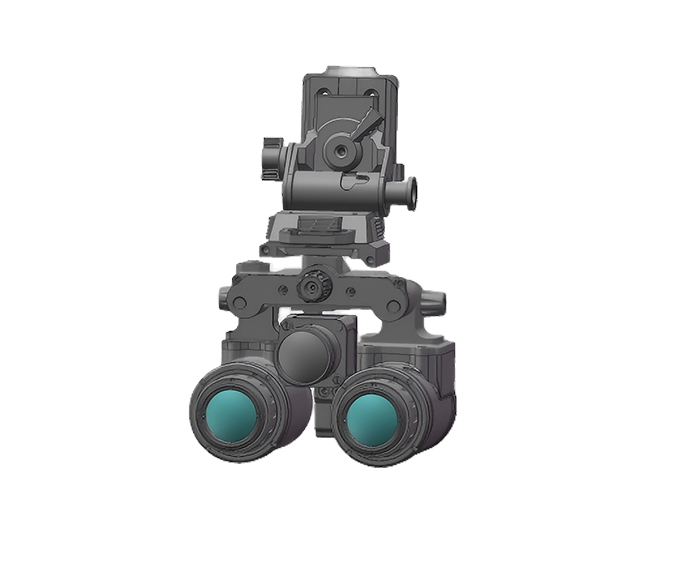
The next-generation binocular night vision device is the culmination of comprehensive improvements to a robust, proven system, prioritizing stable performance. A new rotary control switch has been introduced. This single switch controls system power, gain, and auxiliary functions, offering intuitive and convenient operation while significantly reducing weight. We've also equipped it with an improved diopter adjustment assembly, reducing recoil, providing a firmer feel, and greater strength. The infrared focusing floodlight assembly has also been upgraded, offering a wider floodlight mode to cover the entire field of view, and a more focused beam mode for illuminating dimly lit corridors and caves. Like its predecessor, the diopter adjustment range is +2 to -6 diopters and fully complies with the latest military standards, including immersion depth (50 meters).
Our product features a "tactical monocular cutoff" function, which automatically cuts off power to a channel when it is rotated upwards out of the user's line of sight. This eliminates stray light emanating from the monocular eyepiece, preventing the user's position from being revealed on the battlefield.
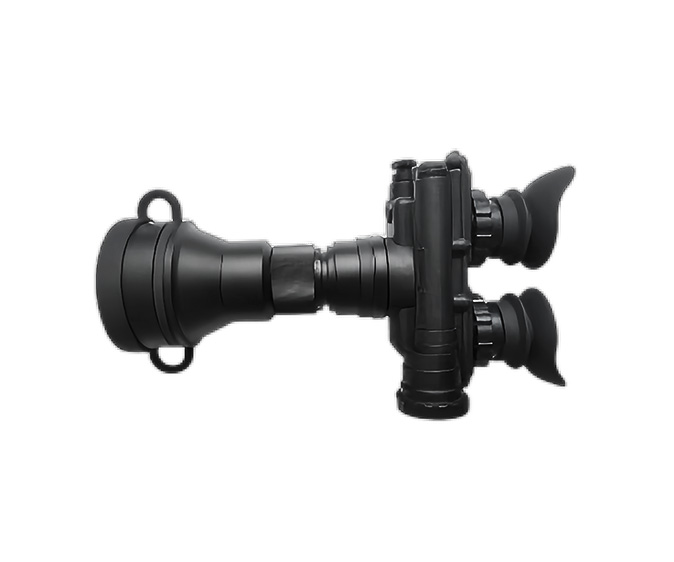
The night vision device can be used with optional 3x afocal lenses. Each 3x magnifier can either slide into the objective lens or screw into the objective lens's threaded hole. For extended use, it is recommended to screw it into the objective lens to prevent it from falling out. These magnifiers convert the device into binoculars with a fixed 3x magnification.
The optional external battery pack is only available with binoculars manufactured by our night vision equipment company that have an external power interface, designed to extend the system's lifespan. If you wish to use this battery pack with the system, the power interface must be installed during initial assembly. No modifications can be made to the device afterward. However, you can install the battery interface first and purchase the battery pack later.
With our strong manufacturing capabilities and strategic partnerships, our products have entered the military and defense sectors of many countries. We can customize any of our in-house manufactured night vision equipment products, including magnifiers, to meet customer needs. This includes green and white phosphors and thin or non-coated image tubes. The night vision equipment company focuses on Gen III image intensifiers night vision technology, and can also provide systems equipped with Gen II image intensifiers to meet customers' personalized customization needs.
_20250825145451A168.jpg)